
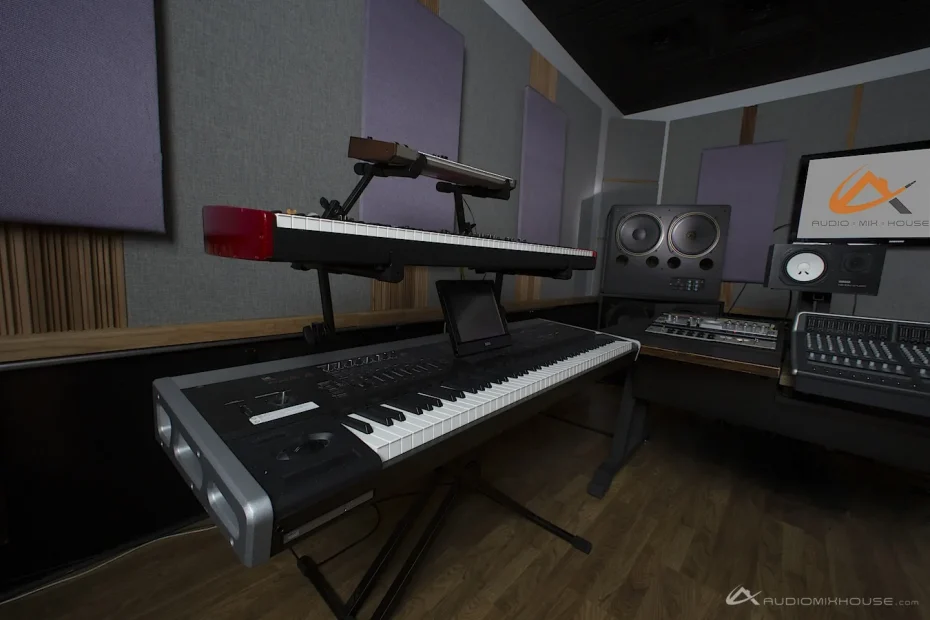
If you want to start creating your own electronic music studio, it is important
to know the essential tips and advice that can help turn your dreams into reality. In this article, we
will walk you through the key steps, necessary equipment, and best practices for creating an
electronic music studio that meets your needs and helps you achieve your musical goals.
Steps for Creating an Electronic Music Studio
The first step in creating an electronic music studio is to define your current skill level and goals. You need to know what kind of electronic music you want to produce and how much experience you have in this field. This will help you determine what equipment you need and make a clear plan for reaching your goals.
Next, choose a location for your studio. Look for a quiet, secluded place where you can work without interruptions. Make sure the room has good acoustics, and arrange it to suit the available space and your needs. You can use acoustic panels and other methods to improve the sound in your studio.
Once the room is ready, you will need to get the equipment for your electronic music studio. Here is a list of the basics you will need:
| Equipment | Description |
|---|---|
| Computer | You need a powerful computer with enough processing capacity to run music production software. |
| Audio interface | An audio interface lets you connect instruments and other equipment to your computer, as well as record and mix tracks. |
| Studio monitors | Quality studio monitors let you hear your music accurately while producing it. |
| Microphone | A good microphone is essential for recording vocals and acoustic instruments. |
| Studio headphones | Studio headphones help you hear the details and nuances in your music. |
Once you have your equipment, you can begin creating electronic music. Use music production software, also called a DAW (Digital Audio Workstation), to record tracks, create rhythms, mix, and master your songs. Explore different production techniques, and use effects and plugins to add color and texture to your music.
By following these steps, you will be well prepared to create your own electronic music studio and express your musical creativity.
Equipment for an Electronic Music Studio
To create an electronic music studio, you will need several essential pieces of equipment. Here are the basics to consider:
- Computer with a digital audio workstation (DAW) – The computer is the heart of your studio. Choose one that is powerful enough and compatible with your preferred DAW.
- Audio interface – This device connects your computer to your other audio equipment. Choose an interface with inputs and outputs that suit your needs.
- Studio monitors – Studio monitors are essential for listening to and mixing your music accurately. Choose high-quality models that reproduce sound faithfully.
- Studio headphones – Good studio headphones let you hear fine details and work on your music quietly. Look for comfortable headphones with a balanced frequency response.
- Microphone – If you plan to record vocals or acoustic instruments, a quality microphone is indispensable. Choose a model suited to the way you record.
- Cables, mounts, and stands – Do not forget essential accessories such as connecting cables, monitor mounts, and microphone stands.
Choose quality equipment that suits your needs, budget, and production style.

Software for an Electronic Music Studio
Software plays a crucial role in creating electronic music. You will need music production software, also called a DAW (Digital Audio Workstation), to record, edit, mix, and master your songs.
Many programs could meet your needs. Here are some of the most popular in electronic music studios:
- Ableton Live
- Reason
- FL Studio
- Logic Pro
- Pro Tools
Each program has its own features and capabilities. Choose the one that best suits your needs and production style. Research your options thoroughly and try free trials before deciding.
Here is an overview of some of these programs:
| Software | Key features |
|---|---|
| Ableton Live | – Intuitive interface for live music creation – Advanced remixing and sampling features – Extensive library of sounds and effects |
| Reason | – Modular rack-style interface offering considerable creative flexibility – High-quality synthesizers and effects – Advanced audio routing options |
| FL Studio | – User-friendly interface based on a building-block approach – Powerful tools for creating rhythms and melodies – Support for VST plugins |
| Logic Pro | – Professional recording and editing features – Comprehensive collection of plugins and virtual instruments – Smooth integration with other Apple devices |
| Pro Tools | – Industry standard for recording, mixing, and mastering – Advanced audio editing features – Online collaboration with other Pro Tools users |
Whatever software you choose, take time to learn it well and explore its features so you can make the most of your musical creativity in your electronic music studio.
Best Practices for an Electronic Music Studio
Good habits can improve your music-making experience in your electronic music studio. Here are some tips for getting the most out of your workspace:
1. Make sure your room has good acoustics
For quality sound in your studio, use acoustic panels to reduce unwanted echoes and resonances. Position your equipment carefully to limit acoustic interference.
2. Balance audio levels
Keep the audio levels of your tracks and effects balanced. Clipping or excessive compression can reduce sound quality, so adjust levels to avoid distortion.
3. Use effects and plugins judiciously
Effects and plugins can add depth and texture to your electronic music. Use them with restraint and subtlety to avoid a cluttered or artificial sound. Try different settings to find the right balance.
4. Keep your workspace clean and organized
A tidy workspace helps you stay focused and work more efficiently. Organize your cables, accessories, and instruments to avoid unnecessary distractions.
5. Experiment with different sounds and production techniques
Try new sounds, virtual instruments, and production techniques to develop your own style. Do not limit yourself to one approach: stay curious and open to experimentation.
Keeping these practices in mind will help you create an environment that supports creativity and quality music production in your electronic music studio.
“`
| Best practices | Benefits |
|---|---|
| Good acoustics | Reduces unwanted echoes and resonances for quality sound |
| Balanced audio levels | Prevents distortion and maintains optimal sound quality |
| Judicious use of effects and plugins | Adds depth and texture without cluttering the sound |
| Clean and organized workspace | Supports focus and efficiency |
| Experimentation with sounds and production techniques | Helps develop a unique, creative style |
“`
For an overview of the benefits of these practices, see the table below:
Tips for Creating an Electronic Music Studio on a Limited Budget
If you want to create your own electronic music studio on a limited budget, here are some useful tips:
- Look for special offers and promotions: Search for discounts, sales, and special offers on the equipment and software you need. These opportunities can save you money while helping you get quality equipment.
- Use free trials: Before investing in expensive software or plugins, try free versions to learn their features and decide whether they meet your needs.
- Buy only what you really need: List the equipment and plugins essential to your studio and focus on those purchases. Avoid unnecessary spending to make the most of your budget.
- Get creative: If your budget is limited, look for other ways to equip your studio. For example, consider buying used gear or adapting equipment you already own.
- Upgrade your studio gradually: Start with the basics, then improve your studio as you have more money available. This lets you build it up over time while staying within budget.
“Creating an electronic music studio does not necessarily require a large financial investment. With smart choices and a little creativity, you can set up your studio even on a limited budget.”
To illustrate these tips, here is a list of essential equipment for an electronic music studio on a limited budget:
| Equipment | Price |
|---|---|
| Computer with a free DAW | Free – $1,000+ |
| Audio interface | $100 – $300 |
| Studio monitors | $100 – $300 |
| Studio headphones | $50 – $200 |
| Microphone | $50 – $200 |
| Virtual instruments and plugins | Free – $500+ |
| Accessories (cables, mounts, etc.) | $50 – $100 |
Note: The prices shown are approximate and may vary by brand and features.
With these tips and this equipment list, you can begin to create your own electronic music studio even on a limited budget. The key is to make sensible choices, look for good deals, and stay creative in your approach.
Conclusion
Creating your own electronic music studio can be exciting and rewarding. By following the tips and advice in this article, you can set up a studio that meets your needs and helps you realize your musical dreams. Take time to learn and experiment and, above all, enjoy creating your own electronic music.
FAQ
What are the steps for creating an electronic music studio?
To create an electronic music studio, first define your skill level and goals. Then choose a location and arrange the room to suit its acoustics and available space. Next, get the necessary equipment and choose music production software for recording, editing, mixing, and mastering your songs. Finally, experiment with different sounds and styles to develop your own signature sound.
What equipment is essential for an electronic music studio?
Essential equipment for an electronic music studio includes a computer with a digital audio workstation (DAW), an audio interface, studio monitors, studio headphones, a microphone, cables, mounts, and stands. Choose quality equipment that suits your needs and budget.
What software is recommended for an electronic music studio?
Recommended software for an electronic music studio includes Ableton Live, Reason, FL Studio, Logic Pro, and many others. Choose the program that best suits your needs and production style.
What are the best practices for an electronic music studio?
To improve your music-making experience, pay attention to your room’s acoustics, balance audio levels, use effects and plugins judiciously, and keep your workspace clean and organized. Experiment with different sounds and production techniques to develop your own style.
What advice do you have for creating an electronic music studio on a limited budget?
To create an electronic music studio on a limited budget, look for special offers and promotions on equipment and software, make use of free trials, and buy only the equipment and plugins you really need. Get creative by exploring other options or repurposing equipment you already own.
How do you create your own electronic music studio?
To create your own electronic music studio, follow the key steps: define your skill level and goals, choose a location, arrange the room to suit its acoustics and available space, get the necessary equipment, and choose music production software to record, edit, mix, and master your songs. Experiment with different sounds and styles to develop electronic music that is uniquely yours.