
DJing is much more than a passion for electronic music. It is an art that requires advanced skills and techniques to create unique, captivating mixes.
In this article, we will explore advanced DJing and the techniques DJs use to create innovative, surprising mixes. We will discuss electronic music mixing, building dynamic DJ playlists, and using DJ controllers to deliver outstanding performances.
DJing goes beyond mixing: it is also a form of music production in its own right. DJs are artists who manipulate sounds, use effects, and play with rhythms to create an unforgettable musical experience.
In the following sections, we will explore the history of DJing, the essential skills needed to become an accomplished DJ, the required equipment setup, and how to build a diverse music library for varied, exciting DJ sets.
Whether you are a beginner looking to learn or an experienced DJ seeking to push your creativity further, this article will help you master advanced DJing techniques in electronic music.
The History of DJing
DJing, or disc jockeying, is an art that dates back to the early twentieth century. This form of musical expression has evolved considerably thanks to the pioneers who shaped its history.
“DJing grew out of people’s passion for music and their desire to share it with audiences eager to hear new sounds.”
One of the early pioneers of DJing was Jimmy Savile, who made an impression with his radio show “The Savile’s Travels” in the 1940s. His ability to select and mix tracks opened the way to an entirely new listening experience.
Another DJing pioneer was Kool Herc, from the Bronx in New York. He is considered one of the pioneers of hip-hop and rap and is known for his breakbeat techniques, which influenced many DJs who followed.
The contributions of these pioneers and others laid the foundations of modern DJing. Their creativity and passion inspired generations of DJs to push the boundaries of mixing and create unique musical experiences.
Essential DJ Skills
DJing is the art of mixing and manipulating music to create a unique experience. To become a skilled DJ, you need to master several core skills. Here are the essential DJ skills:
- Beatmatching: Beatmatching means synchronizing the beats of two tracks. It creates a smooth transition between tracks and keeps the energy consistent on the dance floor.
- Phrasing: Understanding track structure is essential for harmonious transitions. Phrasing involves identifying key moments in a track, such as breaks and build-ups, so you can bring them into the mix at the right time.
- EQ and gain control: Balancing frequencies and controlling gain let you adjust the sound of each track to create a cohesive mix. With equalization (EQ), a DJ can reduce unwanted frequencies and bring out key elements of each track.
- Effects and transitions: Creative use of effects such as reverb, delay, and flanger adds depth and texture to a mix. Techniques such as filtering and crossfading allow smooth transitions from one track to the next.
- Mixing techniques: Mixing techniques include precise tempo adjustment, crossfading, filtering, and other advanced methods. They help create fluid transitions and maintain energy on the dance floor.
- Transition techniques: Moving between tracks is one of the most important aspects of mixing. Transition techniques include choosing tracks carefully, using loops and samples, and creating a coherent flow from one track to the next.
- DJ effects: DJ effects are creative tools that add distinctive and unexpected elements to a mix. Experienced DJs use effects subtly and thoughtfully to hold their audience’s attention.
Mastering these core skills is key to becoming a skilled DJ. Practice regularly and experiment with different techniques to develop your own style and create memorable sets.
In the next section, we will cover DJ equipment setup, an important part of delivering a quality performance. Read on!
Setting Up DJ Equipment
A successful DJ performance depends heavily on the equipment setup. To get the most out of your mixing experience, choose DJ equipment that suits your needs. The key parts of any DJ setup include:
1. Turntables and CDJs
Turntables and CDJs are fundamental pieces of DJ equipment. They let you control and mix tracks precisely. Traditional turntables offer a distinctive hands-on experience, while CDJs provide advanced digital features.
2. DJ Controllers
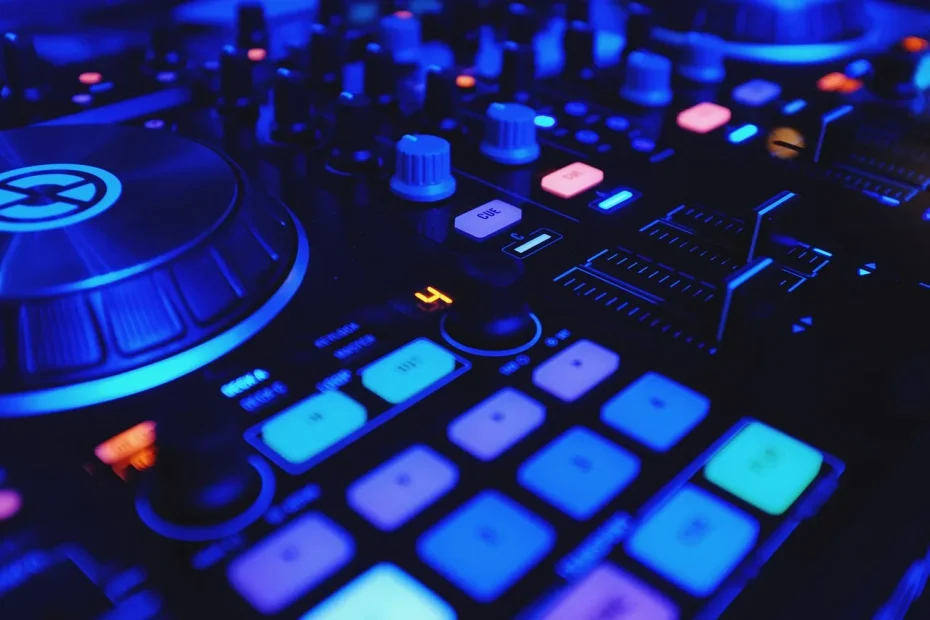
DJ controllers have become popular in recent years thanks to their versatility and portability. They offer many features, including track management, mixing, and effects. DJ controllers are ideal for DJs who travel or want a more compact setup.
3. DJ Mixers
DJ mixers are essential for blending and shaping the sound during a performance. They let you adjust volume, EQ, and effects to create a balanced, enjoyable listening experience.
4. Headphones
Good headphones are crucial for DJs. They let you hear tracks clearly and prepare your next mix without interference from surrounding noise. Choose quality headphones with good sound isolation for the best listening experience.
5. Speakers
Quality speakers are essential for delivering clear, powerful sound during your DJ performances. Choose speakers suited to the size of the venue and your audience for an excellent listening experience.
Every DJ has different equipment preferences. Consider your musical style, budget, and specific needs before investing. Whether you choose traditional turntables or modern DJ controllers, select high-quality equipment to support a strong performance.
Choosing the right equipment setup will let you mix with passion and creativity while giving your audience an unforgettable experience. In the next section, we will look at how to build a diverse music library.
Building a Music Library
To build a diverse music library, it helps to know the different music genres available. One of the most popular and influential is electronic music. This genre encompasses a wide range of styles and sounds, offering listeners a distinctive musical experience.
Electronic music includes many subgenres, such as techno, house, trance, and drum and bass. Each has its own sound and defining characteristics. Exploring them can introduce you to new artists and releases that match your musical tastes.
To prepare your music library, start by organizing your files and tracks into folders. You can sort them by genre, artist, release year, or any other criteria that make them easy to find. Music management software or a dedicated app can help you organize and access your collection.
It is also important to keep up with new releases and trends in electronic music. Reading specialist blogs and websites, listening to radio shows, and attending music events and festivals are excellent ways to discover new tracks and find inspiration. Regularly exploring new genres and subgenres can enrich your music library and broaden your horizons as a DJ.
FAQ
What are the advanced DJing techniques used in electronic music?
Advanced DJing techniques in electronic music include beatmatching, understanding track structure, balancing frequencies, using effects creatively, and mastering smooth transitions.
What is the history of DJing?
DJing has its roots in the early twentieth century. Pioneers such as Jimmy Savile and Kool Herc contributed significantly to the development of DJing as we know it today.
What are the essential DJ skills?
Essential DJ skills include beatmatching, understanding track structure, balancing frequencies, using effects creatively, applying mixing techniques, and making smooth transitions.
What equipment does a DJ need?
Essential DJ equipment includes turntables, CDJs, DJ controllers, DJ mixers, headphones, and speakers. Choose a setup that suits your needs and consider several factors when buying DJ equipment.
How can a DJ build a diverse music library?
To build a diverse music library, learn about different music genres and explore electronic music subgenres. Organization and music preparation are also essential for finding and selecting new tracks while keeping up with trends.